Madhav had never called it a business.
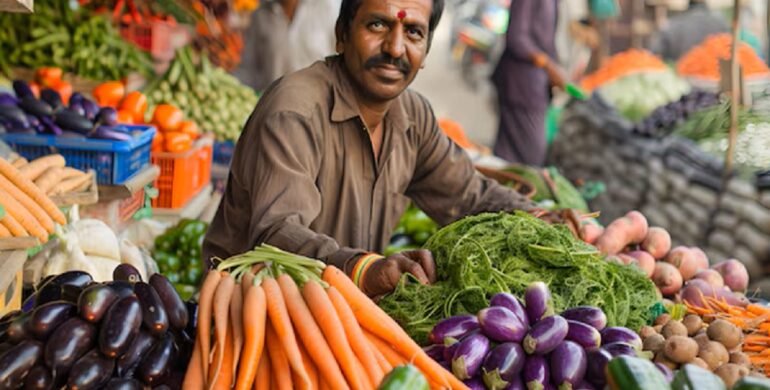
To him, it was simply the rhythm of the seasons- waking before the sun, tending to his rows of tomatoes and chillies, and rushing to the wholesale mandi before the heat could steal the life from his harvest. There were no balance sheets, no storage strategies, and no long-term plans.
And yet, his hands were always full.
His neighbours knew his produce was the best in the district. Small local vendors would wait for his cart, knowing his vegetables were grown with a care that surpassed the industrial farms nearby. In every practical sense, his farm was already an enterprise.
Except, it remained fragile.
The idea of scaling up-of moving beyond the daily gamble of the wholesale market-sat at the edge of his mind for years. But so did the hesitation. The “system” felt like a labyrinth designed for someone else. Formalizing meant dealing with cold storage contracts, logistics, and certifications that felt distant and complicated.
He had heard stories. Of farmers losing everything to middleman contracts. Of banks that asked for paperwork he didn’t possess. Of a world that saw him as a labourer, not an entrepreneur.
And so, for years, Madhav stayed where he was. Working. Earning. Sustaining. But always one bad monsoon or one market crash away from ruin.
When he finally walked into the Veeravratham Foundation, he did not walk in with a grand vision. He came with a quiet scepticism, shaped by years of being told that small-scale farming was a dead end.
The difference was immediate.
The conversations were in his own language- familiar and grounded. The mentors weren’t theorists; they were people who understood the grit under his fingernails. They didn’t show him abstract graphs; they showed him other farmers in his own taluk who were now using direct-to-consumer models.
The steps were broken down- not as daunting hurdles, but as practical tools. For the first time, the “market” did not feel like a predator. It felt like an opportunity.
Within months, Madhav had done what he had postponed for a decade.
He integrated biological pest management that slashed his input costs. He stopped being a victim of the mandi price and started supplying high-quality, “Green Box” vegetables directly to urban housing cooperatives.
Now, he is exploring something he had once thought impossible-setting up a community-managed solar cold storage unit to ensure no vegetable in his village ever goes to waste again.
His land has not changed. His dedication has not changed. But the way his work moves through the world has.